
Index:
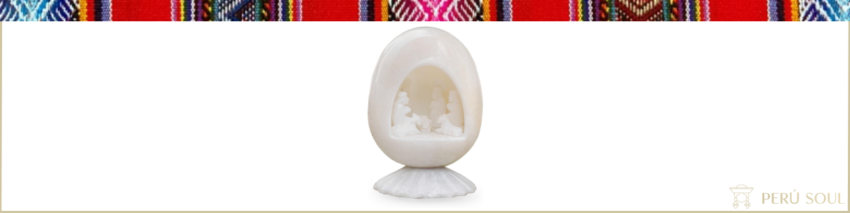
Imagine running your fingers across a stone as soft as fresh snow from the Andes. That’s the Huamanga stone, a little piece of Peru that artisans turn into pieces full of faith and beauty. Here at Peru-Soul.com, we celebrate every bit of our culture with the same love the masters in Ayacucho feel when they carve. Get ready to smell damp earth, hear the gentle tap of the chisel, and fall in love with this treasure that connects past and present.
The Geographic Origin of Huamanga Stone
Huamanga stone comes from hidden quarries in the province of Cangallo, Ayacucho. The districts of Pomabamba, Chacolla, Canchacancha, and Chuschi hold the purest veins of this Peruvian alabaster. It’s calcium sulfate, formed by ancient volcanic processes that left behind a white rock, sometimes with soft gray or sepia streaks.
Its low hardness — between 2.2 and 2.7 on the Mohs scale — makes it special. You don’t need brute force to shape it. Just patient hands and a lot of love for detail. That’s why it replaced marble centuries ago, and every piece feels completely unique, just like the mountains that gave birth to it.
The cold Andean air, the sun painting the quarries gold at sunset, and the silence broken only by the wind… all of that stays trapped inside the Huamanga stone. It isn’t just a mineral. It’s the memory of the land itself.
The History of Huamanga and the Birth of the Carving Tradition
Huamanga was the original name for what we now call Ayacucho. The Spanish founded it in 1540 as San Juan de la Frontera de Huamanga. During colonial times, marble was scarce, so local artisans discovered this soft stone and mastered it. That’s how the tradition began — one that today is recognized as National Cultural Heritage.
The Huamanga stone was first used for religious images: Virgins, saints, entire nativity scenes. Workshops in Santa Ana and the historic center hummed with the constant sound of chisels. Each figure received delicate polychrome painting and fine gold details, with faces so alive they almost seemed to breathe.
In 1825 Simón Bolívar renamed the city Ayacucho after the battle that sealed our independence. But the soul of Huamanga never left. It stayed in every carving, in every Virgen de Copacabana flanked by Andean sirens that blend Catholic faith with ancestral beliefs.
What Does Huamanga Mean in Quechua?
Huamanga comes from ancient Quechua, and its exact meaning fades into the mists of time. Some scholars link it to something like “the place that comes into the light” or “the one that begins anew.” Others connect it to the flight of the huaman, the sacred Andean hawk that soars over the mountains.
Whatever the origin, the name carries strength and purity. That’s why the Huamanga stone wears it with pride: it’s the stone that came into the light to tell our story. No wonder artisans feel it almost like an extension of their own blood.
What Is Huamanga Stone Like?
Huamanga stone is white like a cotton cloud, sometimes with delicate gray or bone tones. Its texture feels creamy, almost soapy to the touch. When polished, it glows with a soft matte sheen that makes you want to caress it.
It’s lightweight, easy to move, and holds up beautifully indoors. Its pale color catches light in a magical way, creating shadows that shift with the time of day. Picture it on your shelf — the afternoon sun makes it look alive.
Because it’s so workable, it allows tiny details: an angel’s eyelashes, the folds of a cloak, a Virgin’s tears. It’s craftsmanship made to touch the heart.
What Does Carving in Huamanga Stone Look Like?
Carving in Huamanga stone is a dance between the hands and the rock. First the block is cut from the quarry. Then the master sketches the design with charcoal. With knives, fine chisels, and different grades of sandpaper, they slowly remove material.
There’s no rush. One single piece can take weeks. Next comes polishing with water and fine sand until the surface feels like silk. Finally, the polychrome: oil or tempera colors that bring faces and robes to life.
The most loved themes are complete nativity scenes, patron saints, miraculous Virgins, and even secular figures like dancing couples or Quinua bulls. Every chisel strike tells a story. Every piece is one of a kind.
Huamanga Stone in Today’s Peru
Huamanga stone is still beating strong in Ayacucho. Workshops of the artisans’ association in the Santa Ana neighborhood work from sunrise to sunset. Young people learn from grandparents, and the tradition refuses to fade.
Now they also carve modern pieces: lamps, candle holders, abstract figures that mix ancestral roots with contemporary style. At national and international fairs, Huamanga stone wins hearts and eyes. It’s Peruvian pride crossing borders.
And the best part? Every direct purchase from the artisan supports entire families. This is living culture, not a museum piece. It’s Peru breathing, creating, and moving forward.
Who Is Huamanga Stone For and How to Choose the Real Thing
Huamanga stone is perfect for you if you love decoration with soul. It creates peaceful prayer corners at home, makes a Christmas nativity that lasts generations, or simply fills a space with authentic Peruvian beauty.
How do you choose the real one? Look for pure white or natural veins — never factory-painted. Check the fine details: delicate fingers, living expressions. Ask the artisan for the story behind it; the best ones sign their work. The genuine Ayacucho version stands out for its incredible softness and that special glow only the local stone gives.
The advantages are clear: it’s lightweight, easy to clean with a soft cloth, doesn’t crack over time if kept indoors, and brings the Andean spirit right into your home. The Peruvian origin makes all the difference because the technique was born here, and the knowledge has passed through generations. A carving made anywhere else will never carry that same emotional connection.
You can acquire Huamanga stone crafts straight from the workshops in Ayacucho, at the artisan markets in the historic center, or at fairs where the creators themselves tell you how they shaped every fold. The welcome is warm, the price is fair, and you take home not just an object, but a story told in person.
At Peru-Soul.com we feel that same passion for authenticity. Here we discover together the flavors, scents, and colors that make our Peru so special — and the Huamanga stone is one of those treasures that fills us with quiet pride.
A Little Piece of Peruvian Soul in Your Hands
The Huamanga stone isn’t just a carving. It’s the white embrace of the Andes, faith shaped with patience, the sound of the chisel that never stops. It’s Ayacucho in its purest form, Huamanga alive, Peru you can touch and feel.
When you look at it, close your eyes and you almost hear the distant quena flute, smell fresh bread from the market, and feel the cool mountain breeze on your skin. It’s simple magic, but it goes deep.
If this journey through the Huamanga stone touched your heart, come explore more with us at Peru-Soul.com. Dive into the Peruvian gastronomy that wins over every palate, the culture that makes us unique, and more stories that celebrate our beloved land. Because the real Peru isn’t just told… it’s lived.
Thanks for walking this path with me! See you in the next article, with more flavor and color from Peru.